Monitored systems charge $25–$50 a month, forever. These don't. Instead of a response centre, they call 911 or your family directly. That trade is worth making with your eyes open — this page lays out both sides.
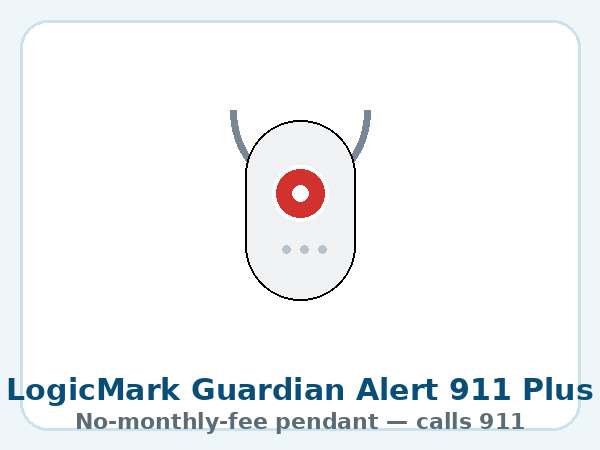 Cellular · fall detection · no fee
The strongest no-fee option we found: 4G cellular (no landline needed), two-way voice straight to 911 dispatchers, and fall detection that can place the call automatically. Water-resistant; lanyard or belt clip. No monitoring centre in between — the call goes to 911 itself.
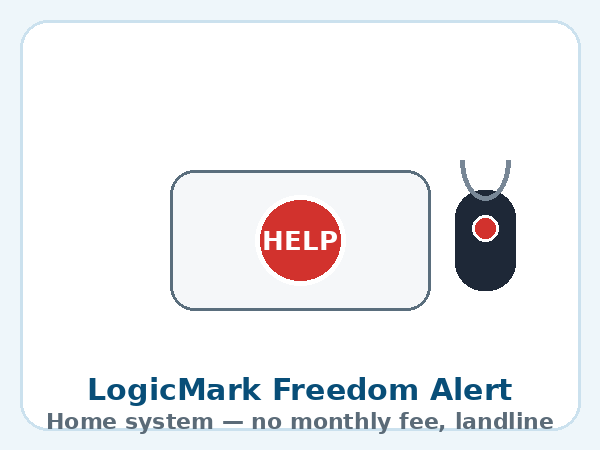 Home only · landline required
The long-running home version: a two-way voice pendant that uses your landline to call up to four programmed contacts and then 911. Rechargeable pendant with a base backup battery. Button-press only — there is no automatic fall detection on this model, and it only works within range of home.
 Already on the wrist
If the wearer already has (or wants) an Apple Watch and iPhone, fall detection and Emergency SOS are built in with no monitoring subscription. An LTE model can call away from the phone for a carrier line fee — that fee is for the phone line, not monitoring.
 Android equivalent
Hard fall detection sends an SOS to chosen contacts. No monitoring subscription; needs an Android phone for setup and regular charging.
A monitoring centre can call a daughter first for a minor fall. A direct-911 device sends every automatic call to emergency services — including false alarms.
911 centres don't always receive a pendant's GPS location the way a monitoring centre does. The wearer must be able to speak and say where they are, or help may be slower.
Monitored plans bundle extras — lockboxes for responders, caregiver apps, activity alerts. No-fee devices are a button and a call, nothing more.
Two years of a $40/mo monitored plan is about $960 plus equipment. A no-fee device is a single purchase. For an active, communicative wearer, that can be the right call — literally.