
Most of us picture the old pendant commercial — "I've fallen and I can't get up." The modern version is better: watches and pendants that can sense a fall and call for help on their own, even if the wearer can't press a button. This guide compares them plainly, from a caregiver's point of view.
The best device is the one that gets worn every day — in the shower, to bed, and out the door. Pick the category that matches the routine, then compare within it.
Monitored pendants and watches that can place a call automatically after a fall is sensed.
For wearers who refuse a "medical pendant" but will wear a watch — including options with no monitoring company at all.
One-time-purchase devices that call 911 or family directly. No monitoring centre, no subscription — know the trade-offs.
The seven questions to answer before you buy, including the ones sales reps hope you won't ask.
Press the button — or, with fall detection, let the device sense the fall — and the wearer is connected through the pendant or watch itself to a response centre staffed around the clock. The operator already has the wearer's address, medical notes you provided, and a call list: a daughter first, a neighbour second, emergency services when needed. They stay on the line until help is arranged. That human layer is what a monthly fee buys, and it is the honest dividing line in this whole category: monitored systems sell a person answering, while no-monthly-fee devices sell a direct call to 911 with nobody in between.
Everything else is fit. A system that lives on a base station only protects within range of home. A mobile system with GPS works on the walk, in the garden, and at the store — and costs more per month. Battery life decides whether charging is a weekly non-event or a nightly chore that quietly stops happening. Our costs guide shows what each route adds up to over one and three years, and the seven questions walk through the fit decisions in the order families actually face them.
Four starting points that cover most families. Full reasoning is on the category pages. Prices checked November 2026 and may change.
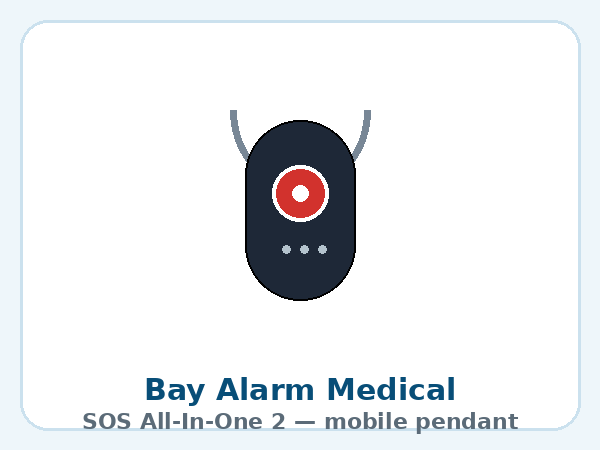 Best all-round monitored
One small pendant that works at home and away, with two-way talk, GPS location, and a caregiver tracking option. Automatic fall detection is an add-on. No long-term contract; plans are month-to-month.
Bay Alarm vs Medical Guardian, head-to-head · See its 1- and 3-year cost
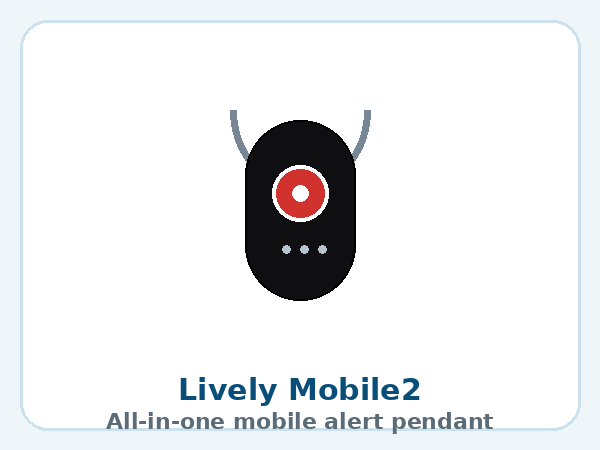 Simple, from Best Buy's Lively
A single-button mobile alert with GPS and an Urgent Response centre. Fall Detection is an add-on to either plan, and only works worn on the included lanyard. Family can follow along in the Lively Link app. Sold with the Jitterbug phones under the same service.
Mobile2 vs MGMini, head-to-head · See its 1- and 3-year cost
 Smallest monitored pendant
Medical Guardian's smallest mobile device: GPS and Wi-Fi location, step counter, up to 5 days of battery, worn on a lanyard or belt clip. Fall detection is available as an add-on option at activation.
Mobile2 vs MGMini, head-to-head · See its 1- and 3-year cost
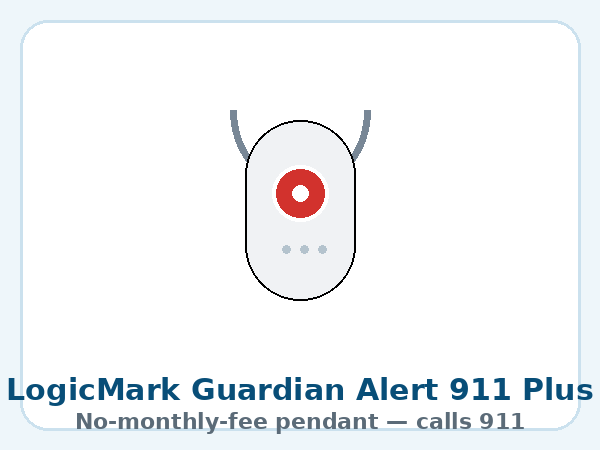 Best no-monthly-fee
No monitoring company and no monthly bill. The pendant talks directly to 911 over 4G, and its built-in fall detection can place that call automatically. Water-resistant, with lanyard and belt clip.
 Still out and about? A no-monthly-fee pendant like this one talks straight to 911 — no monitoring company, no monthly bill. See how the no-fee options work →
A medical alert system is the whole service: a wearable button, a connection to a 24/7 response centre (or, on no-fee devices, a direct call to 911 or family), and the people who answer. Fall detection is one optional feature inside some systems — sensors that try to recognise a fall and start the call automatically when the wearer cannot press the button. You buy the system first, then decide whether the fall-detection add-on is worth its monthly fee.
Monitored plans in this guide run from about $25 to $85 a month depending on the device, checked November 2026. Fall detection typically adds about $10 a month on top, and some systems charge a one-time equipment or activation fee. Our costs page totals each system over one and three years, because the monthly sticker is never the whole bill.
Yes. Most mobile systems in this guide have their own built-in cellular connection and GPS, so they work at home and away without a landline or a phone of their own. The exceptions are older home systems that plug into a landline, and mainstream smartwatches like the Apple Watch, which do need a paired smartphone.
Original Medicare (Parts A and B) does not cover medical alert systems. Some Medicare Advantage plans and some private or long-term-care policies offer an allowance toward one, so it is worth checking your specific plan — but plan on paying out of pocket in most cases.
It happens to almost everyone eventually — a dropped pendant or a sharp movement can look like a fall to the sensors. Most systems give the wearer a short window to cancel, and a response centre will always try speaking to the wearer first. Practise cancelling together during a test call so a false alarm is a shrug, not a scare.
Device fees, activation, monthly monitoring and the fall-detection add-on — totalled over one and three years for every major system.
The conversation most families dread, from someone who has it at his own kitchen table: raising it, choosing together, and the monthly test-call habit.